Which Plastic Sheet Do You Need?
Most people ring us knowing what the part has to do, not what it should be made of. That’s the question we answer all day, so we’ve put the answers here.
We’ve been cutting and fabricating plastics in Sydney since 1968. What follows is what we’d tell you on the phone, including the times the cheaper material is the right one.
Start here: find your job
Nine jobs, nine answers. Tap the material for sizes and prices.
Signage, displays, glazing, anything that has to look sharp
Clearest of the lot. Lasers to a clean polished edge, and it holds up outside for years.
It’s going to get hit, or it’s a safety screen
Much tougher than acrylic. Ours is UV coated both sides, so it holds up outside either way up.
Thermoforming, or food contact
Forms at a lower temperature than acrylic and you don’t have to dry it first.
A light substrate for print or mounting
Rigid, light, takes direct print and vinyl. Routs and screws cleanly.
Vacuum forming on a budget, or internal display work
Cheapest sheet that forms well. Keep it indoors.
Wear strips, chute liners, cutting boards, chemical tanks
Built to take abrasion and chemicals rather than to look good.
A mirror in a public or high-traffic space
About half the weight of glass and far harder to shatter. Note it can’t be bent, the backing won’t take it.
Flat, rigid exterior panels or cladding
Barely moves with temperature, so big panels stay flat in the sun.
Colour matching, backlighting or diffusion
Opal, frost, transparent tint, fluorescent and pastel. Branded ranges if you need an exact match.
Compare the common four
Acrylic, polycarbonate, PETG and PVC foam cover most jobs. On a phone, swipe the table sideways.
| Cast acrylic | Polycarbonate | PETG | PVC foam | |
|---|---|---|---|---|
| Optical clarity | Excellent | Very good | Very good | Opaque |
| Impact resistance | Moderate | Very high | High | Low |
| Scratch resistance | Good | Poor unless coated | Moderate | Poor |
| Outdoor / UV | Excellent. Clear won’t yellow | Good. Ours is UV coated both sides | Limited | Limited |
| How we cut it | Laser or router. Laser gives a polished edge | Router only. Polycarbonate can’t be lasered | Laser or router | Router or saw |
| Thermoforming | Good | Good, but must be pre-dried | Excellent | Not suitable |
| Edge finish | Saw, laser or diamond polish | Saw or routed, stays matt | Saw or laser | Saw or routed |
| Relative cost | Mid | High | Mid | Low |
Swipe sideways to see all four columns.
Six things worth knowing before you order
1. There’s no such thing as 5mm acrylic
We get asked for it constantly. Acrylic jumps from 4.5mm to 6mm, with nothing in between. Polycarbonate is the same, 3mm then 4.5mm, no 4mm.
Cast acrylic sheet runs 1.5mm to 25mm. Above that we’re into block, 30mm to 100mm. If your drawing says 5mm, tell us whether you’d rather go up or down and we’ll price it.
2. Sheets only come so big
Standard is 2440 x 1220mm. Oversize, where the gauge allows it, is 3050 x 2030mm. That’s the ceiling, so anything larger has to be made in panels and joined. People often assume the 8ft x 4ft import size and get caught out both ways, either asking for something too big or paying for two sheets when one oversize would have done. Tell us the finished size and we’ll work out the most economical way to get there.
3. Internal or external? It matters more than you’d think
For a box, case, cover or vitrine, a 500mm cube built to internal dimensions and one built to external are two different products. On 6mm material that’s 12mm of difference on every axis, which is the difference between your object fitting and not fitting. We ask this on nearly every job. Save yourself a day and tell us up front.
4. Edge finish is three different prices
Most people write “polished edges” without knowing there’s a choice. There are three:
Saw cut. Matt, functional, cheapest. Fine where the edge is hidden or fixed against something.
Laser cut. Comes off the machine glossy. Acrylic only, and it’s the best value if you want a clean visible edge.
Diamond polished. Optically clear, the premium finish. Straight edges only, we can’t diamond polish a rounded corner.
Tell us where the edge will be seen and we’ll tell you which one is worth paying for.
5. Cut to size isn’t always cheaper than a sheet
For anything we stock, we cut what you need and you pay for that piece. But specials, some colours, mirror and unusual gauges have to be ordered in as a full sheet, and then you’re paying for the sheet whether you use all of it or not. It catches people out. If you’re after something out of the ordinary, ask before you assume, and if there’s more of the same coming later we can usually improve the price.
6. Let us do the holes
Acrylic cracks when you drill it with a standard timber or metal bit. The bit grabs and splits the sheet, usually right at the end of the cut, usually on the last hole. If you need holes, mounting slots or countersinks, put them on the drawing and we’ll machine them. It costs less than a replacement panel.
Why we don’t sell extruded acrylic
Extruded is cheaper per sheet, but it machines badly. It burrs and gums where cast cuts to a clean polished edge, and it crazes far more readily when you solvent bond it or clean it with the wrong thing. For fabrication work the saving disappears the first time a part fails. If price is the deciding factor and the panel doesn’t need to be clear, PVC foam or HIPS is a better economy than dropping to extruded.
What we need to quote you
Most enquiries come in missing a couple of these, and it costs a day going back and forth. Give us these seven and you’ll usually get a price the same day.
1. Material. Or tell us what the part does and we’ll pick.
2. Thickness. Check it’s a real gauge. See point 1 above.
3. Sizes. In mm, and say whether they’re internal or external for anything three dimensional.
4. Quantity. And whether more is likely later, because it changes the price.
5. Edge finish. Saw, laser or diamond polished.
6. Holes or machining. On a drawing if you have one. DXF or DWG is ideal, a dimensioned sketch is fine.
7. Delivery or pickup, and the postcode. Freight on large or fragile items can be a real number, so it’s better to know early.
Not sure on some of it? Send what you have. We’d rather work it out with you than have you guess.
Cut to size
A lot of our sheet can be ordered cut to your dimensions rather than as a full sheet. You enter the sizes on the product page and we cut it before it ships. It varies by material, so check the product page for the cut to size option.
If the material you want doesn’t show it, or the job needs more than a straight cut, send us the details and we’ll quote it. We run laser cutting, CNC routing, line bending, thermoforming and diamond polishing in house at Moorebank, so cut sheet and finished parts come from the same place.
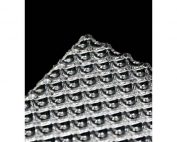
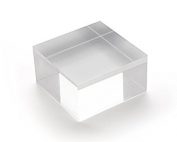
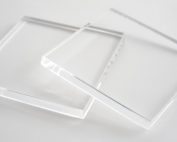
Clear Acrylic Sheet
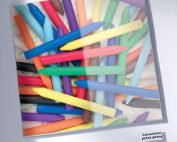
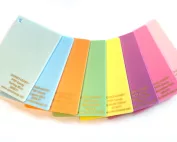
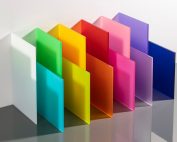
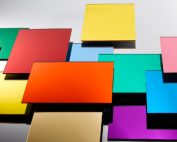
Coloured Acrylic Sheet

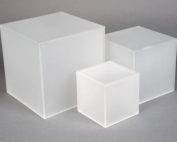
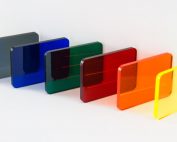
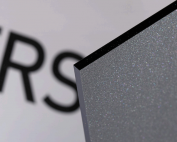
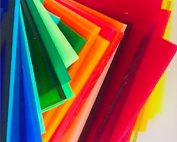

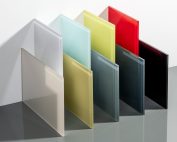



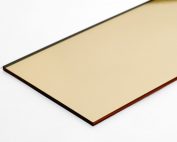
Acrylic Mirror Sheet

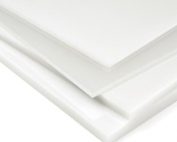
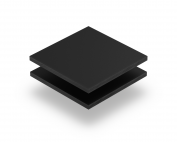
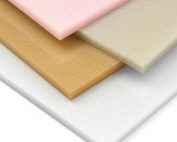
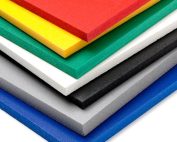
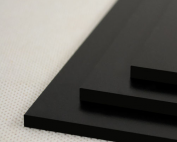
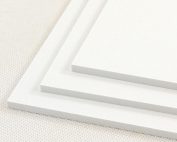
Foam PVC Sheet
Clean with a mild soapy warm water solution using a soft cloth or sponge. Never use window cleaners (like Windex) or abrasive scouring pads, as these will damage the surface. For best results, use a specialized plastic polish like our antistatic cleaner. For a complete step-by-step guide and expert tips, please read our full article on How to Clean Acrylic Sheet: A Guide to Maintenance and Care
Acrylic is 50% lighter than glass and has much higher impact resistance. It also offers better optical clarity, transmitting 92% of visible light compared to glass’s 90%.
There is no actual difference in the material. Perspex® is a brand name for acrylic (polymethyl methacrylate). Whether you call it Acrylic, Perspex, or Plexiglass, you are referring to the same high-quality plastic.